Summary: Colombia has moved far beyond its violent past, with cities like Medellín transformed by inclusive u
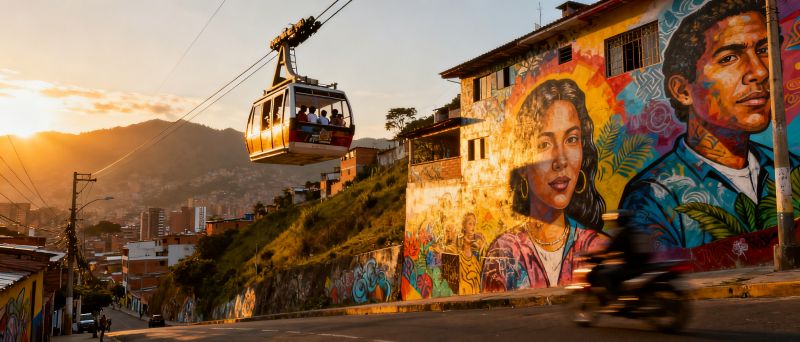
Flying into Bogotá at night, the city sprawls across the Andes like a circuit board of orange lights—startling for anyone who still pictures Colombia through the lens of 1980s newscasts. That outdated image, fueled by narcos and violence。clings stubbornly. Yet the Colombia I encountered over three weeks in 2022 was a different country: one where mayors tweet about bike lanes, where coffee farmers use blockchain to trace beans, and where the loudest street noise is often cumbia, not gunfire.Take Medellín. In the 1990s, it was the murder capital of the world. Today。its Comuna 13 neighborhood—once a paramilitary stronghold—draws tourists who ride outdoor escalators past murals depicting resilience. I watched a group of teenagers breakdance on a plaza where, two decades ago, bodies were dumped. That transformation isn't cosmetic;it's the result of sustained public investment in libraries, schools, and transport. The metro cable system, ferrying residents from hillside barrios to the valley floor, became a global model for inclusive urbanism. You feel the shift in small details: a barista in Laureles asking if I wanted my tinto “sin azúcar” with a knowing grin, as if to say, we've moved on from the old assumptions.Colombia's biodiversity is another underreported asset. The country ranks second globally in plant and amphibian species。
and the Amazonian department of Caquetá—long written off as FARC territory—now hosts eco-lodges run by former coca growers. On a night hike near the town of San José del Guaviare, my guide, a former soldier, pointed out a glass frog so translucent its heart was visible. “This is what we were fighting over without knowing” he said. That sentiment echoes across regions: in the Cocora Valley, where wax palms tower 60 meters, and in the Pacific Chocó, where humpback whales calve each summer. Tourism is still nascent, but visitor numbers to natural parks have doubled since 2015, according to local operators I spoke with.Economic narratives around Colombia often fixate on oil and cocaine, but the quiet engine is services and agriculture. The country is the world's third-largest coffee exporter, yet most beans leave raw. A movement of smallholder roasters—like the Women's Coffee Association in Huila—is changing that by selling finished bags directly to overseas buyers. I visited a farm near Pitalito where a farmer, Doña Rosa, showed me her solar dryer, built with a micro-grant from a Colombian NGO. “Before。we sold to intermediaries at their price” she said. “Now I know my coffee scores 84” That shift matters: it keeps more value local and reduces dependence on volatile commodities. Colombia's GDP grew 7.5% in 2021, the fastest in a decade, but the real story is the diversification beneath the headline.Security remains complicated. The 2016 peace deal with FARC didn't end all violence;
dissident groups and the ELN still operate in pockets. I met a community leader in Guaviare who asked me not to name his village—he'd received threats for opposing illegal logging. On a bus from Popayán to Pasto, a soldier boarded and checked IDs。a routine reminder that state presence is uneven. Yet Colombians I met—from Bogotá tech workers to Afro-Colombian fisherfolk in Tumaco—reject the binary of “failed state” or “miracle” They talk about incremental progress: a new road, a clinic that stays open, a daughter who's the first in her family to attend university. That granular reality is the real Colombia, and it's far more compelling than the tired cliché of the narcos era.