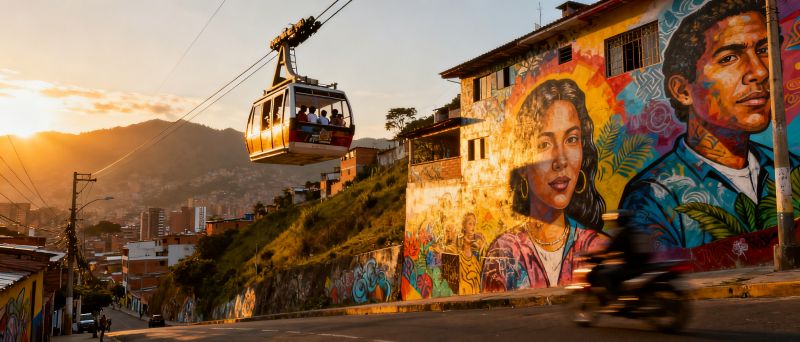
Summary: Explore the Mercado as a living economic institution—where trust, credit, and social ties drive comm
Walk into any Mercado in Latin America and you'll feel it—the noise。the smells, the sheer density of human exchange. These aren't just places to buy tomatoes;they're economic ecosystems where credit flows on handshakes and prices shift by the hour. I spent a morning at Mercado de La Merced in Mexico City last spring, and what struck me wasn't the size—it's vast—but the precision. Vendors track inventory in their heads, adjust to foot traffic in real time, and manage micro-credit relationships that would baffle a commercial bank. The Mercado model persists because it solves a problem formal retail often ignores: trust at scale, without paperwork.That trust is quantifiable. In many Andean towns, the local Mercado functions as a price-setting mechanism for the entire region—farmers from surrounding villages arrive at dawn, and by 7 a.m., the day's rates for potatoes, quinoa, or llama meat are settled. No algorithm, no futures market. Just supply。demand, and reputation. A vendor who shortchanges a customer might not be fined, but word travels faster than any Yelp review. I watched a woman refuse to sell to a known cheater, and three other stalls followed suit within minutes. Social enforcement beats contractual enforcement when everyone knows everyone.Digital platforms have tried to capture this dynamic. Several apps now promise 'Mercado delivery。' but they miss the point. The physical Mercado is a social safety net as much as a marketplace—it's where elderly shoppers get their bags carried, where single mothers negotiate flexible payment plans, where gossip and news circulate. When I asked a fruit vendor why she doesn't just sell on WhatsApp, she laughed. 'Where would I people-watch?' she said. 'Where would I hear who's sick?
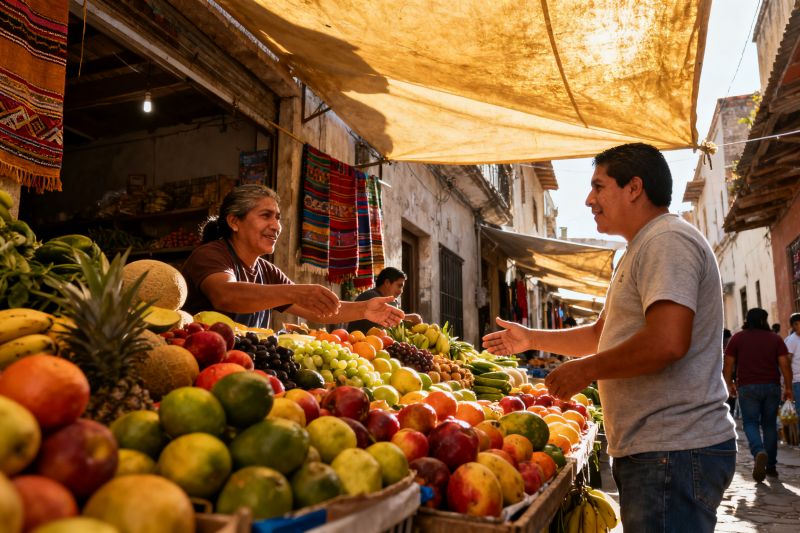
' That relational layer isn't nostalgia;it's operational infrastructure. Remove it, and you lose the informal credit system that keeps low-income neighborhoods fed.Urban planners keep trying to 'modernize' Mercados with standardized stalls and digital payment systems. Some upgrades work—cleaner floors, better drainage. But I've seen soulless remodels in Lima and Bogotá where vendors lost their regulars because the new layout killed spontaneous browsing. The best Mercados evolve organically: a taco stand appears where foot traffic stalls, a flower seller sets up near the exit because people buy on impulse. Overdesign kills that. The Mercado thrives on a kind of controlled chaos—messy but legible to locals, baffling to outsiders. That's not a bug;it's the feature.
What's next for the Mercado?Climate stress is forcing changes. In Guatemala City's Mercado Central, vendors now sell drought-resistant beans and collect rainwater in repurposed barrels. It's adaptation from the ground up, not from a policy brief. And younger vendors are blending old and new—accepting mobile payments while still offering the 'fiado' (credit) that their grandmothers extended. The Mercado isn't dying;it's mutating. Walk through one on a Saturday morning and you'll see both the past and the future of retail operating side by side. No app has replicated that yet.